Paper Handling Feeders
A technical review of mechanical sheet separation systems, acoustic ultrasonic multifeed transducers, and straight-through transport geometries in enterprise document scanners.
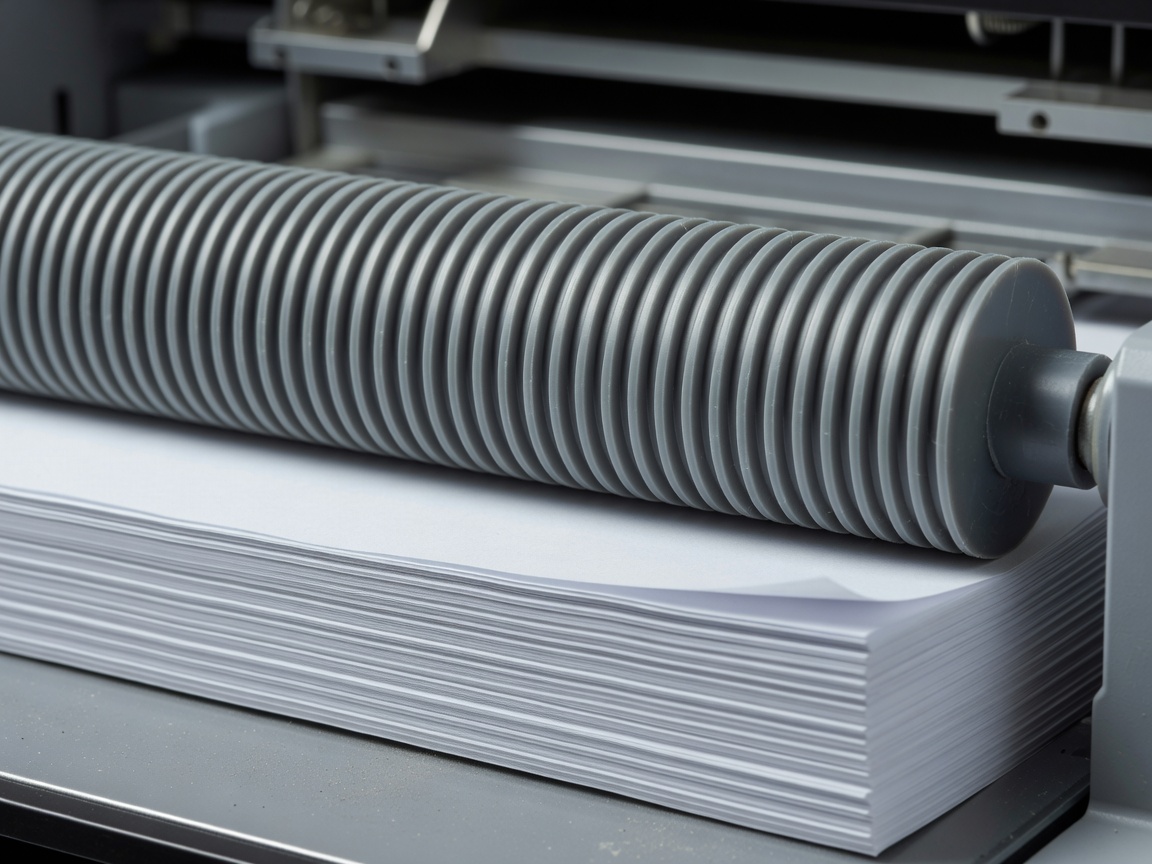
1. The Mechanical Dynamics of Separation: Retard Pad vs. Reverse Roller
Reliable high-speed throughput requires isolating a single sheet of paper from a 100 to 500-sheet input tray in mere milliseconds. Two primary mechanical methods exist across commercial scanners:
- Friction Retard Pad Systems: Found predominantly in compact desktop units. The pick roller drags the top sheet forward against a stationary textured rubber or polyurethane pad. While cost-effective, friction pads generate substantial drag and wear unevenly, requiring replacement every 20,000 to 50,000 sheets to prevent persistent double-feeding.
- Active Reverse Separation Rollers: Deployed in production-grade scanners. An upper feed roller rotates in the direction of sheet travel while a synchronized bottom separation roller rotates counter-directionally with a torque-limiting clutch. If two sheets enter the nip simultaneously, the reverse roller pushes the lower sheet backward into the tray, allowing only the top sheet to enter the scan path.
2. Ultrasonic Acoustic Multi-Feed Detection
Mechanical separation cannot eliminate all double-feeds, particularly when documents feature static cling, residual adhesive, or envelope folds. To guarantee zero dropped pages in compliance-sensitive environments, scanners deploy ultrasonic acoustic arrays.
A high-frequency piezoelectric transducer emits sound waves across the transport channel. As the acoustic wave strikes a single sheet of paper, the wave attenuates predictably based on standard paper density. However, if two sheets pass simultaneously, the minute microscopic air pocket trapped between the paper layers causes severe acoustic scattering. The receiving transducer detects this amplitude drop in microseconds, instantly stopping feed motors and notifying the operator before paper jams or ripped originals occur.
3. Transport Path Geometries: U-Turn vs. Straight-Through
Chassis architecture dictates transport flexibility. Scanners designed with tight U-turn paper paths return processed sheets to an upper output tray directly in front of the operator, minimizing desk footprint. However, bending paper through a 180-degree turn restricts media thickness to approximately 130 g/m² and risks creasing fragile 19th-century manuscript paper.
Production document scanners incorporate switchable exit gates. Opening the rear door creates a completely flat, straight-through horizontal path. This allows thick plastic ID cards, embossed credentials, laminated envelopes, and heavy archival board up to 413 g/m² to feed without inflection stress.
Summary of Operational Checks for Feeder Maintenance
- Inspect pick roller tread grooves daily for paper clay and ink accumulation.
- Clean feed paths using specialized non-alcohol lint-free wipes to preserve elastomer flexibility.
- Calibrate ultrasonic sensor threshold modes when running batches containing sticky labels or taped receipts.
- Verify torque clutch resistance during scheduled 100,000-page service intervals.